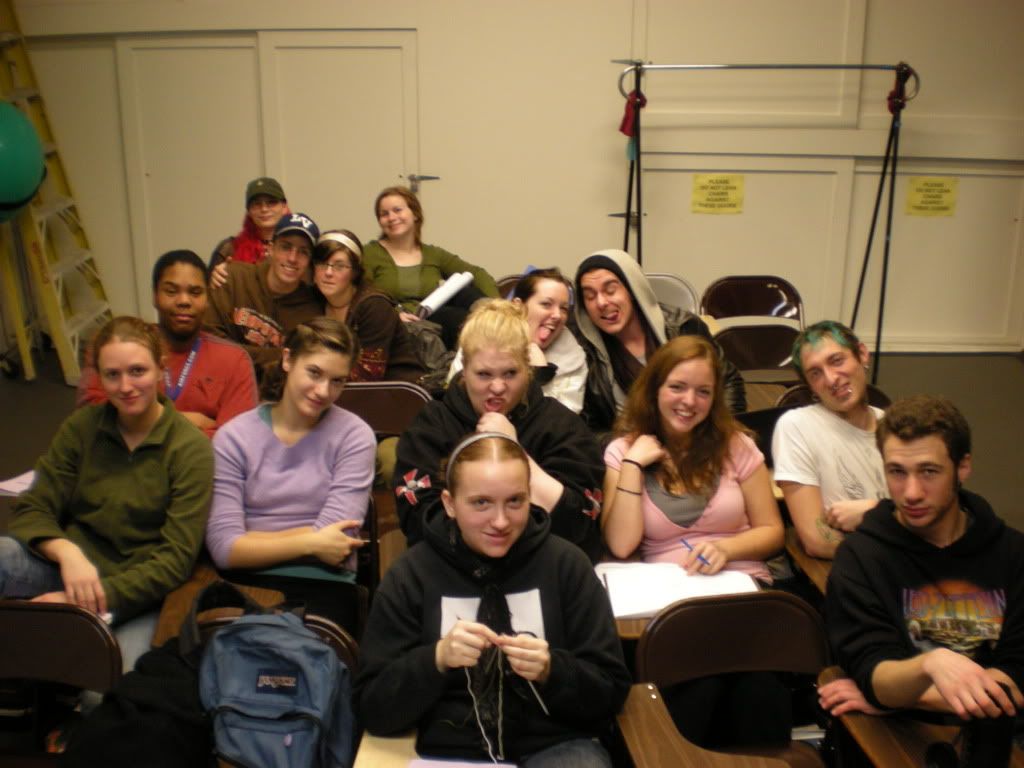
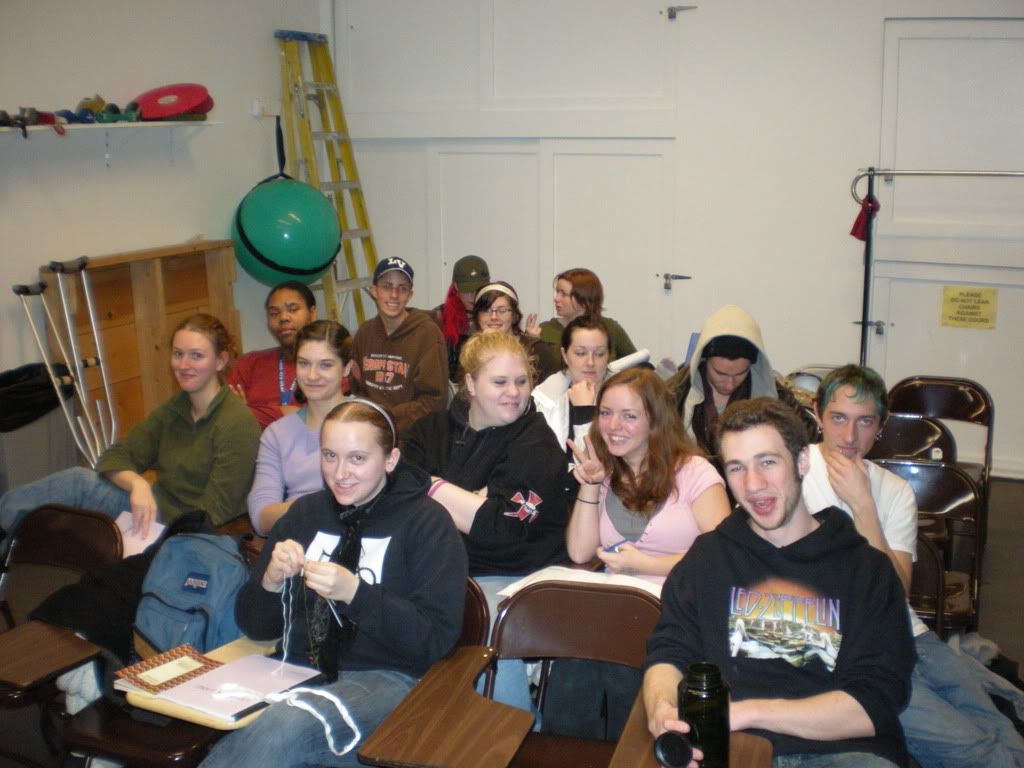
Thursday, October 30, 2008

Okay, we'll catch the 2:30 boat from Pier 55 and return on either the 3:00 or 3:40 from Seacrest Park. The whole travel schedule and info (on rates and such) is here
Go Water Taxi!

Sunday, October 26, 2008

Invisible Cities

Due Wednesday, October 29, 2008
For the writing, please consider and respond to the following:

Working from both the reading and your memories, describe at least three of the cities Marco Polo discusses with Khan, and compare to cities that you know, have visited, read about, or feel an affinity towards. What unites these disparate places? What differences do they exhibit? Who populates them? How do you navigate them? What is their character, and how does your writing reflect that character? Do you need to use different types of writing to give the sense of each different place? Is one city defined through poetry while another needs to be interviewed? When do you gain familiarity with a city? Can you trust a city?

Thursday, October 23, 2008

Freeway Park


Thanks to Erica Howard for these links to info about Freeway Park

The Cultural Landscape Foundation has a concise description of the project here

image courtesy Ryan Forsythe, image description on Wikipedia here

Tuesday, October 14, 2008

Mid-term conferences

By consensus, here's the schedule for the conferences next week, both Monday and Wednesday during class time (beginning both days at approximately 4:30). You only need to be present for your individual conference. For this week, you will be working independently on your writing on Invisible Cities (and your Invisible Cities), more information is here

Monday meetings at Kerry Hall (we'll meet in the lobby, or most likely at Joe Bar)
Ian
Carla
Stella
Brian
Zoe
Angel
Brendon
Kelton
Camryn
Abbie

Wednesday meetings at MCC, 7th Floor, Faculty/Staff Lounge
Lisa
Jessie
Sam
Sasha
Sydney
Travis
Eunyi
Keenan
Ross
Blake

Thursday, October 2, 2008

Street Text


Here's the post that I'd like you to comment on with the writing that you read in class yesterday.

Tuesday, September 30, 2008

SHARING=CARING

Who's bringing food to share with the class? Remember, it's not a meal, but something small, inexpensive, and shareable!

Every Friday:
10/3: Jessica, Travis, Marc

10/10: Sasha, Angel, Sam

10/17: No Food! Cornish Library Orientation 2:30- 4:00

10/24: Carla, Stella, Zoe

10/31: No Food! Water Taxi!

11/7: Ross, Ian, Brendon

11/14: Sydney, Blake, Brian

11/21: Camryn, Kelton, (Eunyi, Lisa TBA)

11/28: No food! Thanksgiving!

12/5: Carla, Stella, Jessica

12/12: Blake, Marc

Food Pyramid provided for the public domain by the USDA Center for Nutrition Policy and Promotion (CNPP) 2005. The image and text has not been modified from its original form.

Janet Cardiff

Hi,

Here is the link to Janet Cardiff & George Bures Miller's website which has audio samples from many of their walks. Cornish also has two books with companion audio in their collection (link to the library is on the right-hand side of your screen).

Sunday, September 7, 2008

Charrette timeline


Many of the activities below reitterate the course calendar, but my intention here is to couch them within the framework of the CHARRETTE

PROJECT 1: CHARRETTE CASEBOOK

Your first major project for our class is a “charrette,” a term that comes from the disciplines of design and architecture. A charrette is “a period of intense (group) work, typically undertaken in order to meet a deadline. Also: a collaborative workshop focusing on a particular problem or project; a public meeting or conference devoted to discussion of a proposed community building project” (Oxford English Dictionary). The term comes from a customary practice of French architecture students, who would use a small cart to carry their models and plans on the day of an exhibition; the word “charrette” literally means “handcart” in French.

So what do handcarts have to do with cities, interdisciplinarity, practices and collaboration? We’ll be adopting the charrette paradigm for an interdisciplinary and collaborative group project in which you identify, analyze and resolve a problem or gap within a specific urban community: the Cornish community.

Our process over the next few weeks will involve several stages and the practices of different disciplines to help you identify, analyze and resolve the problem or gap your group wants to work on. The project will culminate in two final products: a group presentation of your design and a “casebook” that you put together on your own, which will include materials you created along the way and a short reflective piece of writing on your experience.

The gap (or problem) we are attempting to expose is this:

Where and how do you see opportunities for practitioners of your discipline (or, really, you) to work between the Main Campus Center and Kerry Hall? How and where does your studio practice potentially unite the Cornish communities with the greater Seattle community?
Is this a project that could happen in multiple places, at multiple times? Are you working on it when you ride the shuttle to class? Have you ever been to Kerry Hall?

For this project you will be producing two key elements. The first is a casebook, or portfolio; a collection of all your writings, maps, and notes on this project. This may also include any research you are doing along the way. Many of the elements included in the casebook will be group authored--we'll write them together in class (similar to the disciplinary "maps" you've made and presented to the group. In line with this, you will also be composing a summative writing or response to the entire process, describing what you did, how the work developed, and what the experience meant to you. More information on all of the elements to be included in the casebook will be provided in class.

The second element is the project itself. Rather than say this is a presentation, it may be helpful to think of it instead as a performance, or installation, utilizing the methods and tools of your discipline. For example, it minght be that a musician in the class may choose to design a performance to take place somewhere along the route from MCC to Kerry Hall. Perhaps the music they play references the history of the area, or their feelings about a certain space.

This project is designed to be temporary and non-invasive. No illegal activites will be considered or discussed in this framework. As much as we are examining the boundaries of our neighborhoods and communities, my expectation is that you will also examine the boundaries of the law.

Here's how we start:

Wednesday 9/10
We'll do a mini-mapping project, taking a block (Lenora-Boren-Terry) around Cornish and describing (in writing, maps, photographs, drawings) everything we can see, hear, smell, touch, and taste there (okay, not everything, but you get the idea). Time permitting, we'll look at the results at the end of class, or more likely at the beginning of class on Friday.

Friday 9/12
We will meet in the Faculty/Staff Lounge and, using the same tactics as Wednesday, you'll explore/chart/find routes between the main campus and Kerry Hall, describing and mapping the area you traverse. How do you get from one place to another and what dictates that pathway? What factors help you choose your route?
DUE MONDAY:
1. Transcribe (type) and print your observations/drawings/notes from your field work on Wednesday and today.
2. Make a map of your route and copy for everyone in the group. Map should include street names, clearly depict he route you followed, and note both landmarks in the areas (neighborhoods) as well as indicate potential sites for your group project(s).
3. Read articles from Twyla Tharp, Ed Ruscha, and John Cage for discussion on Monday.

Mon 9/15

Discussion on Tharp, Ruscha, Cage.
Reading for Wed: James Rojas, Jess Mowry

Wed 9/17
Discussion on Rojas, Mowry
Reading for Fri: Klosterman

Fri 9/19
Discussion on Mowry, Klosterman, Rojas
Writing Center orientation 2:15- 3:00 pm
Film: The Social Life of Small Urban Spaces
Reading for Monday: Calvino, Marcovaldo
WRITING DUE NEXT WEDNESDAY: Two elements, as follows (approximately 3 pages or more):
First, an outline of the project and your contributions, including a daily timetable between now and the presentations, scheduled to begin on Friday, October 3. In this outline, please also describe the relationship of your project to the readings we have done in the course, and how they may (potentially) overlap one another. Are there spaces that Rojas describes that you find yourself gravitating towards? Does the way that Robby negotiates his environment in "Rats in the Trees" offer ways of understanding how you move through a park, or bus stop?

Second, a rough draft (or preliminary version) of your project, identifying the components-- what you will be doing or making as an artistic response. This may include any number of things, such as blocking diagrams (for movement pieces), short scripts or character sketches for performances, layouts/comps for posters, stencils for chalk designs, etc. Remember, this project is-- in part-- being designed to introduce you as members of the Cornish community to other members of the community (including Cornish). Beginning next Friday, we will share these with the class.

Week 4
Mon 9/22
Field work in groups, locations to be discussed prior to class

Wed 9/24
Field work as group. MEET AT KERRY HALL.
Writing project: Kerry Hall sound/music map-- listing spaces, the music or sounds that they conjure, and brief descriptions of how the spaces & sounds go together. Please consider this as a draft, a document we will build and change throughout the next couple of weeks. Some of the ways that students have handled this prompt in a past class are archived here


Fri 9/26
Discussion on Kerry Hall music, look at different strategies for navigating the building and music

Discussion on excerpts from Italo Calvino's Marcovaldo

WRITING DUE NEXT MONDAY: Describe (using citations or quotes) an instance in Calvino's story where Marcovaldo regards the city in an unexpected way and explain a situation where you may have had a similar experience. When has the city surprised you? What, if any, ways can you integrate these *surprises* of the city in the charrette project you are designing?

Week 5
Mon 9/29
Discussion on Calvino & Lars Eighner
Reading: Center for Land Use Interpretation/ Wendover, Denis Wood
Field work, location TBA
Writing DUE Wednesday: Assemble a writing (to be read in class on Wednesday) that consists ONLY of written text found during our class walk. As we designed the rules in conversation, some of the things to keep in mind: found words may be used multiple times in your work, but cannot be pieced apart to make new words.

Wed 9/30
Field work, location TBA. Class reading found works (as above), and group work

Fri 10/3
Class meeting looking at draft versions of charrette projects IN PROGRESS

Week 6
Mon 10/6
Student Affairs Presentation

Wed 10/8
Presentations, as needed TBA. You'll present your proposal or project or work in progress or piece to the class. This will most likely take a couple of days, and span the distance between/across the campuses, so prior to this day, we'll design a schedule of events/presentations to help you plan.

Fri 10/10
Presentations this day

Writing DUE Wednesday, 10/15: An essay responding to your experiences and the development of your charrette project. This piece is designed to reflect on the last six weeks of the course, and describe/explain particular elements that have been significant in your work (in IS) during this time. As we've discussed in class, the curriculum has (obviously) been very layered with readings, videos, audio works, your writings, field work, seminars, and group/collective project work all sharing the same place.

We've met with representatives from across Cornish, including the Writing Center, Student Affairs, Marketing (Meike Kaan, for those of you in Design), and others during this time. We've ventured out into the surrounding neighborhoods. We've walked up Capitol Hill. We've ridden (commandeered?) the Shuttle. We've read (together, sometimes out loud) fiction, poetry (in two languages), essays, maps, and the landscape (including moving buses).

You've worked in groups together, exploring the layers of your own discipline. What drives you, and how is that drive perhaps encapsulated or exhibited in the charrette project you've made? Are there things that you learned through the process that you feel are vital to share with an audience, or things that may just need to be written to clarify them?

How have you seen these disparate sources link together in your writing? In your project? Are there things that really worked in the group project? Was your voice heard? How did the project develop with you or around you? What role did you find yourself taking in the process, and is this a role you've previously had in other projects? Part of the ensemble? Composer? Author?

In building a document of this nature, I would encourage you to look back at the readings we've done and the writings you've done (your essays, your descriptions, your notes), looking for patterns and (MLA-style) possible citations or quotes. Did certain authors articulate thoughts on a particular aspect of this program for you?

In considering the length of this document, I'm not going to offer a *word count* as a guide, but my suggestion is that it is a length (maybe 4 pages or more, or more) that allows you some space to substantially discuss everything that went into this project for you.

Week 7
Mon 10/13
MEET AT Kerry 218
Debriefing/ discussion on charrette, writing project: describe and respond to Soundtransit projects on Broadway
Reading assignment: Calvino, Invisible Cities chapters 1, 2-- pp. 1-39

Wed 10/15
Begin discussion on Invisible Cities, chapter---

Fri 10/17 Cornish Library orientation 2:30- 4:00 pm

Sunday, August 17, 2008

Course readings Fall 2008

Charrette reader in three sections:

1: Collaboration, Introducing Interdisciplinary Studies, The Role of the Journal, Artist as Writer

*Kushner, Tony. "Is it a Fiction that Playwrights Create Alone?". Barron, Frank, et al., eds. Creators on Creating: Awakening and Cultivating the Imaginative Mind. New York: Jeremy P. Tarcher/Penguin, 1997.

*Warhol, Andy. "Work". The Philosophy of Andy Warhol (From A to B and Back Again). New York: Harcourt Brace & Company, 1975.

*Teague, Deborah. "Making Meaning--Your Own Meaning--When You Read". Bishop, Wendy, ed. The Subject is Reading. Portsmouth: Boynton/Cook, 2000.

*Tharp, Twyla. "I Walk into a White Room". The Creative Habit. New York: Simon & Schuster, 2003.
*play video of Tharp dance, from Cornish Library

*Ruscha, Ed. Excerpts from Leave Any Information at the Signal: Writings, Interviews, Bits, Pages. Schwartz, Alexandra, ed. Cambridge: MIT Press, 2002. pp. 384-429 (selection).

*put Ruscha books on reserve in Cornish Library


*Cage, John. "Composition as Process". Silence (Lectures and Writings by John Cage). Middletown, CT: Wesleyan University Press.
*Audio of Cage composition, on reserve in Cornish Library

[Tharp, Richter, Ruscha, and Cage as one reading project]

2. Boundaries and Intersections in the City: Seeing Green, Seeing Grey


*Robert Smithson image, see above
Floating Island To Travel Around Manhattan Island
Link to articles and images (on blog only) showing the realized project in 2005

*Calvino, Italo. Excerpts from Marcovaldo: or The Seasons in the City. New York: Harvest Books, 1983.

*Mowry, Jess. "One Way". Rats in the Trees. New York: Penguin Books, 1990.

*Rojas, James. "The Enacted Environment". Groth, Paul and Chris Wilson, eds. Everyday America: Cultural Landscape Studies after J.B. Jackson. Berkeley: Univ. of California Press, 2003.

*Klosterman, Chuck. "The Ice Planet Goth". Chuck Klosterman IV: A Decade of Curious People and Dangerous Ideas. New York: Scribner, 2007.

[pair Mowry, Rojas, and Klosterman together as one reading project]

3. Mapping your environment

*Kaiser, Ward L., and Denis Wood. Excerpts from Seeing Through Maps (The Power of Images to Shape Our World View). Amherst, MA: ODT, Inc.

*Harvey, P.D.A. From "The Map and Its History". Mappa Mundi: The Hereford World Map. Toronto: Univ. of Toronto Press, 1996.

*Lister, Raymond. Selected figures from Antique Maps and Their Cartographers. London: G. Bell and Sons, 1970.

*Buisseret, David. Selected figures from The Mapmaker's Quest: Depicting New Worlds in Renaissance Europe. New York: Oxford Univ. Press, 2003.

*Wood, Denis. "Two Maps of Boylan Heights". Harmon, Katherine, ed. You Are Here (Personal Geographies and Other Maps of the Imagination). New York: Princeton Architectural Press, 2004.

*Davis, Katie. "Memory Maps". Harmon, Katherine, ed. You Are Here (Personal Geographies and Other Maps of the Imagination). New York: Princeton Architectural Press, 2004.

*Turchi, Peter. Excerpts from Maps of the Imagination: The Writer as Cartographer. San Antonio: Trinity Univ. Press, 2004.

*Lamott, Anne. Bird by Bird (Some Instructions on Writing and Life). New York: Anchor Books, 1994.

*Iyer, Pico. "In Praise of the Humble Comma". Bishop, Wendy, ed. On Writing: A Process Reader. New York: McGraw-Hill, 2004.

*****
Post-charette

Naming the City, Remembering the City, Opening the City


*Calvino, Italo. Invisible Cities. New York: Harcourt Brace Jovanovich, 1974.

Orientation, or Moving through Rooms, Neighborhoods, Buildings, and Parks
*Calvino, Italo. "Park-bench vacation", from Marcovaldo: or The Seasons in the City. New York: Harvest Books, 1983.

*Featherstone, Steve. "Heads Up: Military Graffiti in Kuwait and Afghanistan". A Public Space. Brooklyn: A Public Space Literary Projects, Inc., Issue 5, December 2007. pp. 140-155.

*De Botton, Alain. Excerpts from The Architecture of Happiness. New York: Pantheon Books, 2006.

*Kazin, Alfred. Excerpt from A Walker in the City. New York: Harcourt Brace and Company, 1979.

*Lewis, Pierce. "The Monument and the Bungalow". Wilson, Groth, Paul and Chris Wilson, eds. Everyday America: Cultural Landscape Studies after J.B. Jackson. Berkeley: Univ. of California Press, 2003.

*Jackson, J.B. "The Past and Future Park". A Sense of Place, A Sense of Time. New Haven: Yale University Press, 1994.

Working in the City or, The Language of the Office: Office Culture, Office Spaces, Office Writing


*Baker, Nicholson. Excerpt from The Mezzanine. New York: Vintage Contemporaries, 1990.

*Koolhaas, Rem. "Generica". Mutations. Bordeaux: ACTAR, 2001.

*Mozingo, Louise A. "Campus, Estate, Park: Lawn Culture Comes to the Corporation". Wilson, Groth, Paul and Chris Wilson, eds. Everyday America: Cultural Landscape Studies after J.B. Jackson. Berkeley: Univ. of California Press, 2003.

Building through Seattle: Scaffolding, Containers, Atmosphere(s), Disorientation, Development and Loss

*Walker, Lester. American Shelter: An Illustrated Encyclopedia of the American Home. Woodstock: The Overlook Press, 1981.

*Buren, Daniel. "The Function of the Studio". Ulrich-Obrist, Hans and Barbara Vanderlinden, eds. Laboratorium. Antwerpen: Dumont, Promotie Antwerpen Open, 2001.

*Warhol , Andy. "Atmosphere". The Philosophy of Andy Warhol (From A to B and Back Again). New York: Harcourt Brace and Company, 1975.

*Mitchell, Susan. "Notes Toward a History of Scaffolding". D'Agata, John, ed. The Next American Essay. St. Paul: Graywolf Press, 2002.

*Ponge, Francis. Excerpts from Selected Poems. Winston-Salem: Wake Forest University Press, 1994.

*Dillard, Annie. Excerpt from The Living. New York: HarperCollins, 1992. pp. 156-167.

*Morgan, Murray. INSERT READING HERE from Tacoma Public Library Murray Morgan essay collection here

*Offenbacher, Matthew, et al., eds. La Especial Norte (zine). 2008.

Tuesday, August 5, 2008

Calendar Fall 2008

Week 1
Wed, 9/3: Introductions, syllabus reading.

Fri, 9/5:
Writing workshop. Collaborative project by discipline, mapping your discipline.
Readings: Warhol and Kushner
pieces for discussion Monday, 9/8.

Week 2
Mon, 9/8: Discussion on disciplinary approaches to process/product, notetaking (see Warhol, Kushner). Cluster Course reader should be purchased from Perfect Copy and brought to class on Friday, 9/12.

Wed, 9/10: Discussion on studio practice, rehearsal. Introduce charrette, design teams (3-4 people, cross-disciplinary). Field work: Survey the block around Cornish, noting the community--who uses these spaces--and what are possible sites for interventions/insertions? How can artists use this space? Readings: Ruscha, Tharp, Cage for Monday. Bring examples of your journals.

Fri, 9/12: Charrette work-- choose route from MCC to Kerry and chart route (more on this in class).


Week 3
Mon, 9/15
Discussion on field work, Cage, Tharp, Ruscha readings. Play Cage audio in class.

Reading assignment in-class: Deborah Teague, “Making meaning as you read”.

Reading assignment for Wednesday: Jess Mowry, “One Way” from Rats in the Trees, James Rojas, "The Enacted Environment"

Wed, 9/17:
Writing workshop, responding to Rats in the Trees, The Enacted Environment. Reading assignment for Friday: Chuck Klosterman, "Something Wicked This Way Comes".

Fri, 9/19: Charette work,
Writing Center orientation 2:15- 3:00 pm.


Week 4
Mon, 9/22- Fri, 9/26
See Charette post


Week 5
Mon 9/29- Fri, 10/3
See Charette post

Week 6
Mon, 10/6
Student Affairs Orientation
Charrette Casebook due. See Charette post for details.

Wed 10/8
See Charette post for details

Fri 10/10
See Charette post for details.

Week 7
Mon, 10/13:
CLASS MEETING AT KERRY 218, Discussion on charrette projects, viewing/writing descriptions on Soundtransit installations on Broadway
Schedule Mid-term conferences, to take place during Week 8
Course evaluation for mid-term discussion during the next week
schedule reading timeline for Calvino's Invisible Cities,


Purchase Invisible Cities, as we will be utilizing this as our primary text for the next few weeks, followed by a course reader for the last few weeks of the course.

Excerpts from the book (think of this as a trailer) are here

Wed, 10/15
Discuss readings on maps, from Course Reader. Audio samples from Brian Eno (Music for Airports), Jackass, William Wegman-- discuss role of the audience in site-based works

Fri, 10/17
Library Orientation 2:30- 4:00 pm, class meeting at Cornish Library

Week 8
As both Monday and Wednesday of this week will be spent in small group conferences, you will be doing much of the work outside of the classroom. Two components that you will be responsible for during this time include reading Italo Calvino's Invisible Cities and writing in response to the work. For the writing, please consider and respond to the following:

Working from both the reading and your memories, describe at least three of the cities Marco Polo discusses with Khan, and compare to cities that you know, have visited, read about, or feel an affinity towards. What unites these disparate places? What differences do they exhibit? Who populates them? How do you navigate them? What is their character, and how does your writing reflect that character? Do you need to use different types of writing to give the sense of each different place? Is one city defined through poetry while another needs to be interviewed? When do you gain familiarity with a city? Can you trust a city?

M 10/20
Writing on charrette DUE,
Reading assignment: Italo Calvino, Invisible Cities
MID-TERM CONFERENCES AT KERRY HALL

W 10/22
Reading assignment: Italo Calvino, Invisible Cities
MID-TERM CONFERENCES AT MCC, 7TH FLOOR, FACULTY/STAFF LOUNGE

F 10/24
Cluster meeting with Erica Howard, Freeway Park. Links to articles on Freeway Park here

Week 9
M 10/27
Discussion on Invisible Cities

W 10/29
Discussion on Invisible Cities, visit Westlake Park

Fri 10/31
Field work: WATER TAXI TO ALKI. Writing prompt: Describe the journey using only words that you overhear along the way

Week 10
Mon 11/3
Calvino paper with revisions DUE, in-class peer response, discuss

Wed 11/5
Parks (continued): visit Seattle Times Park. In-class writing: Write a description/portrait of someone you passed on the street today. Then, give that description to another person in the class and ask them to make a drawing of that person (based exclusively on the description).

Fri 11/7
Class meeting at Federal Courthouse 2pm. Please remember -- no cameras, food, or drink. Also, you must present a picture I.D. (valid driver's license, state-issued identification, or passport). In-class writing: in every space that we pass through, write something as response.

Week 11:
Mon 11/10
Discussion on Federal Courthouse: Layout, writing responses--describe process for responding. Overview of course reader. Reading assignment: Graffiti piece (?) and Alain deBotton TBA
Describe Friday Volunteer Park field trip and plan itinerary on WEDNESDAY. Students to research and bring list. For this trip, I'd like to try a different format: instead of me leading/framing the experience, I'd like YOU to design what we should be taking from this experience, and examining aspects of the park that interest you, and maybe all of us.

What I'm proposing is this:
We meet at Kerry Hall, and depart (as a group) from there. You (and from here on out, I'll be referring to a collective "you") decide how we get to the park-- bus? walking? carpool?
Bring enough money for bus fare, museum entrance, other costs?

Once we arrive there, my suggestion is we sculpt a scavenger hunt, of sorts, with everyone contributing some places we should see while we're there. In part, this is to frame some of the ways I'd like us to move through the city next semester, but it also reflects the breadth of experiences available at Volunteer Park. Haven't been to Volunteer Park before? An introduction is here.

Wed 11/12
Parks: visit REI, Cascade Park, writing in comparison
Reading assignment (for Friday): TBA

Fri 11/14
Field work: Volunteer Park, as above.

Week 12
Mon 11/17
TBA, draft version below
Update this, but hold as general model: Shared class with Kim Mackay's group-- my class shares drafts of their writings on Volunteer Park with Kim's class, who act as mentors to my group-- providing analysis and feedback on the writing. The suggestions from Kim's class will be utilized in the next version, due Monday 11/24. For this version (keeping in mind that we will continue to work with this paper), please also consider the writings from the Course Reader II, and look for ways to synthesize your views with the views of Pierce Lewis, J.B. Jackson, Nicholson Baker, and Alain de Botton. For example, how does your view of the urban park differ from Jackson's?

Wed 11/19
DUE Draft #2/Synthesis paper on Volunteer Park/Course Reader II (parks). This writing should include your responses to writings by J.B. Jackson, located in the course reader. Discussion and analysis of Synthesis paper (from Kim's class) IN-CLASS. Discuss peer feedback from last week.

Fri 11/21
Columbia Tower,
City Hall, Pioneer Square (time permitting).
Audio descriptions-- what did you hear during the journey?

Week 13
Mon, 11/24
Discussion on Fri 11/21 field work
Writing workshop in small groups, discuss assigned readings from Course Reader
Reading assignment: 
Wed, 11/26 NO CLASS, THANKSGIVING

Fri, 11/28 NO CLASS, THANKSGIVING

Week 14
Discuss final portfolio design (see recent post, handout in class), in-class writing samples.

Mon, 12/1
IS Evaluation discussion

Wed 12/3
Writing workshop, *speed dating-style*, responding to each other's papers, in small groups

Fri 12/5

Meet at MCC
Portfolio workshop, bring draft version of your assembled portfolio

Week 15
Mon, 12/8
Portfolios DUE
FINAL CONFERENCES, GROUP 1 (WE'LL CHOOSE IN CLASS)
PORTFOLIOS DUE, with self-reflective writing introduction
Course evaluation, discussion, overview of Proposed Land Use Action, proposals for Spring 08 projects, Post-portfolio writing project, begin conferences

Wed, 12/10
FINAL CONFERENCES, GROUP 1 (WE'LL CHOOSE IN CLASS)
Course evaluation, discussion, overview of Proposed Land Use Action, proposals for Spring 08 projects, Post-portfolio writing project, begin conferences

Fri, 12/12 Cluster meeting, view The Cruise, Streetwise, Hype? Suggestions?

Tuesday, July 29, 2008

Recon


This is the building on the corner of Terry and Howell, slated for demolition at some point. These images are from a class field trip (reconnaissance of the exterior) on February 11, 2008.

Sunday, April 27, 2008

Friday, May 2


Meet at MCC 107 at 1:30

We'll be viewing Hype! and discussing the history of grunge in Seattle.
Dress Grunge!
Bring grunge-food!
Pie will be provided!

Wednesday, April 23, 2008

FRIDAY, APRIL 25

CLASS MEETING IN LOBBY OF KERRY HALL AT 1:30 PM

In writing

Okay, even though we've gone through it a few times in class, here's the breakdown of everything to be included in your Final Portfolio, DUE THIS FRIDAY, April 25th:

1.
A self-reflective introduction, assessing your progress in the class. While it may be a concise document, this piece of writing would ideally give the reader a sense of both your progression through the coursework as well as sense of how to progress through the writings that follow. In effect, this is a road map (of sorts) to your portfolio.

2.
All of the prompted/assigned writings done either in class or outside of class, most from the first half of the semester. These should be typed, and do not necessarily need to be clean copies (they can have the comments from you or I or both of us). Although I'm not providing a list of these writings, you can find everything we've done in the Spring 2008 calendar link (at right on your screen).

3.
Abstract to your research project. Again, if you have questions on the content or form of this document, check out my previous posting here

4.
Your research project, self-directed. As we discussed, this may take multiple/hybrid forms, incorporating any number of writing approaches we've discussed or read this semester, so it is difficult to say what the "required amount" is going to be for any given person. As a GUIDELINE ONLY, the requirement for this writing is that it be substantial-- exhibiting your depth and knowledge into a site, or subject that extends from your research into that site. In line with this, when you were given the writing prompt to go to another person's location and respond to the experience of being toured, that writing was designed to function (for the person touring ) as a vital element in their process. If you have not done so already, it may be helpful to provide them with a copy of that writing to be included with their works.

5.
Bibliography, annotated (as needed). Looking at this pragmatically, we collectively explored a HUGE range of writings this semester (from handouts, online resources, and the Course Reader to all of the writings that you used in your own research)-- ALL OF THIS SHOULD be included in your bibliography. In the interest of time management, it most likely does not serve you to write up annotated entries on all of these sources, however certain pieces that you found notable or particularly useful should be discussed here, even briefly.

Again, if you have any questions at all during your assembly, please do not hesitate to email me, or post a comment (for the group to see) on this posting. Thanks again.

Wednesday, April 9, 2008

Not Bullitt


C'était un rendez-vous

Here is the wikipedia info
and

Here is the YouTube version


Los Angeles Poverty Department (LAPD)

I'll add their link on the right, but Tonya Lockyer just directed me to the work of the Los Angeles Poverty Department (LAPD),

From their website,

Los Angeles Poverty Department was founded in 1985 by director, actor, activist, and writer John Malpede. At its inception, LAPD was the first performance group in the nation made up principally of homeless people. LAPD is dedicated to building community on Skid Row, Los Angeles. Since 1985, the company has offered performance workshops that are free and open to the Skid Row community— partnering with numerous social service and advocacy groups, including SRO Housing, Inc.; LA Community Action Network; The Downtown Women’s Action Coalition; St.Vincent DePaul Center; The Salvation Army’s Women’s and Men’s drug recovery programs; and the Inner City Law Center.A theater-without-walls for people living in Los Angeles’ inner city, LAPD has also partnered with communities and arts organizations across the United States to create powerful original works that speak to a range of political issues. Extended residencies have been held in Chicago, Philadelphia, Miami, San Francisco, Houston, and Minneapolis, among other cities.

Monday, March 31, 2008

My thesis is

As a comment on this posting, please include either your thesis topic, or questions (likes the ones we shared in class last week) that you will likely be pursuing in your research. For Wednesday, please come prepared with both your thesis (the topic you plan to pursue) and an rough draft of the abstract for your project. Typically, the abstract accompanies your research, and is written after the fact (although it is meant to be read before the research document and frequently contains numerous keywords). For our purposes (and given the time constraints on your project development), you will be writing your abstract alongside your research paper. It will function as both informative and descriptive of your research packet.

HERE is a link to an article from Philip Koopman (from Carnegie-Mellon, 1997), entitled (you guessed it) "How to Write an Abstract". Also,

HERE is a link to similar information from George Mason University (but the blue band in the middle of the online document kinda makes it annoying to read).

Wednesday, March 19, 2008

Experimental Prototype

Here is a link to the wikipedia page on EPCOT, with a description consistent with our overview in class today. Also, for updates on coursework, please click on the SPRING 2008 Calendar link at right (I've been updating it for the coming weeks)

And the Florida city I was trying to recall is Celebration, with some background (again, special thanks to wikipedia) here

Thursday, March 13, 2008

Proposed Land Use Action Tour 2008


I've been compiling images of Alex playing every time we go somewhere, and plan on revising this posting every time we go somewhere new. Alex, if you have scores or audio for any of the music you're playing in these images let me know and I'll try to link some audio/mp3 so people could hear what you're playing

Monday, March 3, 2008

Mid-term conference schedule REVISED

Unless otherwise noted, individual conferences will run approximately 15 minutes. These meetings are designed to be informal conversations-- a chance for us to sit down and discuss you progress and work in the course. If there are specific readings, writings, or discussion topics you would like to focus on, please email me ahead of time, so that I can prepare.
For those of you not in class on Monday, your scheduled conferences are obviously tentative, and need to be confirmed. If you are unable to make your scheduled appointment, please let me know and I'll be happy to sit down with you outside of class. Thanks,

Wednesday, 3/5
4:15 Ryan
4:30 Corey
4:45 Robert
5:00 Graham
5:15 Lindsay TBA
5:30 Nick
5:45 Kati
6:00 Kelly

Friday, 3/7
1:30 Cara
1:45 Julian
2:00 Maia
2:15 Amanda
2:30 Alex
2:45 Jason
3:00 Taylor TBA
3:15 Akasha TBA
3:30 Katherine TBA
3:45 Jake TBA

Urban Archives

Here is a link to the work being done at University of Washington. Special thanks to Gabrielle Dean who located this and passed it along.

Tuesday, February 19, 2008

The Rez As I Saw It

is the title of the new play by Caleb Penn--

IF YOU HAVEN'T SEEN IT YET

I'll have copies of the play available all morning. I'm in the Foundations classroom (room 603, I think) from 8-12. Copies are also available in the library on reserve, and we'll have some available during IS class.
Thanks,

Tuesday, February 5, 2008

Writing projects, with due dates

All of these writings (along with your notes from class and observations from the field) will be submitted periodically throughout the semester, along with an annotated bibiliography

Writing 1, DUE Monday, January 28

Roughly 3 pages introducing your chosen site to your audience--

Where is it?
Why are you drawn to it and how did you first encounter it?
What processes are you finding helpful (or difficult) in researching and translating your experiences into writing?

Specifically, spend some time describing your process (perhaps this could be collected notes that accompany the deeper writing), explaining how and where you are locating information. Are you spending time in the library? Photographing on location? Interviewing? Drawing? Moving in space? Listening to music?

What types of writing are you finding to be most useful in describing or explaining your attraction to this location? Then, in line with these questions, spend some time writing about questions that you may have for both a reader as well as a potential collaborator (remember, we'll be passing these collections around to other members of the class once we get a little deeper into the writing).


Writing 2, DUE Wednesday, February 6

Roughly 3-5 pages, describing a location (a building or site) that no longer exists. Explain your experiences there, giving your audience a sense of why this site resonates with you. What, specifically, do you recall about the location? When were you there? Why is the memory of this space important to you?

Writing 3, DUE Wednesday, February 13

Focus on the context of your chosen PROPOSED LAND USE ACTION location. What is the neighborhood, and who participates in the community? What buildings, resources, parks, amenities are in the vicinity? What are the boundaries of the environment and how does it intersect with other areas in our city?

Writing 4, DUE Wednesday, February 20

Looking back into the past, what historical facts emerge around your site? What events and people were crucial? FIRST DRAFT DUE

Writing 5, DUE Monday, February 25
PORTFOLIO WITH ANNOTATED BIBLIOGRAPHY DUE
Looking back into the past, what historical facts emerge around your site? What events and people were crucial? SECOND DRAFT DUE

SPRING BREAK HERE

THE FOLLOWING PROMPTS ARE DRAFT VERSIONS ONLY
FOR CURRENT WRITING PROJECTS, PLEASE VIEW THE SPRING 2008 CALENDAR


Explore writing about your chosen location in a different voice Say, for example, that you are utilizing historical documents in your research--how do those documents frame their arguments? What is distinct about the voice(s) of the writers? How does a document written by Cornish from 1920 differ from one written this afternoon?

Return, revisit. Spend some time walking around your location IN PAIRS What are you noticing about the area as it undergoes changes? How are other people responding to these changes? Construction workers? Neighbors? Developers? Historians? Artists? This writing may be a word list, poem, short story, hybrid form...

Projection-- what will this site look like in the future? Taking your cues from the signage, the neighborhood, and your own observations, produce a portrait of your location and the city it will join.

Monday, February 4, 2008

Course Reader bibliography

I'm gonna edit this further, but here's a preview of some of the sources cited in the new reader

Burgin, Victor. Some Cities. London: Reaktion Books, 1996.

Brand, Stewart. How Buildings Learn: What happens after they're built. New York: Penguin Books, 1994.

Mumford, Lewis (Jeanne M. Davern, ed.). Architecture as a Home for Man: Essays for the Architectural Record. New York: McGraw-Hill, 1975.

Walker, Lester. American Shelter: An Illustrated Encyclopedia of the American Home. Woodstock: The Overlook Press, 1981.

Geist, Johann Friedrich. Arcades: The History of a Building Type. Cambridge: The MIT Press, 1983.

Saturday, January 26, 2008

Boomtown 1890, Boomtown 1990


These just seemed to go together after our discussion. MOHAI Rules.

Wednesday, January 23, 2008

Where Is It?

Please post the physical description of your site as a comment here (a link to Google Maps would be helpful, but is not required).

Also, please see the calendar below (or linked at right) for a fuller explanation of the initial writings due Monday. And for those of you new to navigating the blog, if you click on the "Spring 2008" calendar link, it will open a new window to that link only. To return to the main blog page, simple click on the header ("Notice of Proposed Land Use Action" title) and you will return to the main blog page.

Sunday, January 20, 2008

Dubailyon

I just came across this on Artforum's website, and well, it seems like something we might want to discuss...


DUBAI PLANS TO BUILD COPY OF LYON

In a move that recalls Abu Dhabi's plans to open its own branch of the Louvre, the neighboring Dubai has announced plans to build its own version of the French city of Lyon in the desert. As Le Monde's Sophe Landrin reports, the architectural replica will consist of a thousand-acre miniature based on "the spirit" of Lyon and will include municipal cultural and educational attractions, including the fabric museum, the university, the Lumière Institute, the institute of the chef Paul Bocuse, and even the soccer club Olympique Lyonnais.

The ambitious project—to be completed in four years—is the brainchild of Buti Saeed Al Ghandi, the chairman of the Emivest, Dubai's biggest investor. According to Landrin, Al Ghandi is said to have "fallen in love" with Lyon, the former capital of Gaul. An initial agreement was signed last week between Al Ghandi, the city, and the various institutions involved. While the inspiration has been found, it's not yet clear on what castles of sand Lyon-Dubai will be built.

Wednesday, January 16, 2008

Proposed Land Use Action CALENDAR

Week 1
Mon, 1/14: introduction, syllabus overview
Wed, 1/16: field trip, Consolidated Works
Fri, 1/18: Tour Paramount Theatre, 2 pm

Week 2
Mon, 1/21: NO CLASS, MLK JR. DAY

Wed, 1/23:
*Writing assignment DUE MONDAY, 1/28:
Roughly 3 pages introducing your chosen site to your audience--

Where is it?
Why are you drawn to it and how did you first encounter it?
What processes are you finding helpful (or difficult) in researching and translating your experiences into writing?

Specifically, spend some time describing your process (perhaps this could be collected notes that accompany the deeper writing), explaining how and where you are locating information. Are you spending time in the library? Photographing on location? Interviewing? Drawing? Moving in space? Listening to music?

What types of writing are you finding to be most useful in describing or explaining your attraction to this location? Then, in line with these questions, spend some time writing about questions that you may have for both a reader as well as a potential collaborator (remember, we'll be passing these collections around to other members of the class once we get a little deeper into the writing).

*Reading for Monday: CLUI, excerpts from Overlook (handout in class)

Fri, 1/25: MOHAI (see link at right)-- Meet at MOHAI at 2 pm

Week 3
Mon, 1/28: WRITINGS DUE (SEE ABOVE)
Debriefing on Paramount Theatre, discuss articles/handouts: Susan Mitchell's "Notes on Scaffolding" and article from New Yorker, look at writings on chosen sites
Reading: Jane Jacobs for Friday
Wed, 1/30: Continue discussion on readings, targeting links to writings (scaffolding)
Fri, 2/1: Seattle Central Library TBA

Week 4
Mon, 2/4: Research overview with Heather Shepherd
Wed, 2/6: Writing 2 due (see recent posting)
Design research model, meeting in MC 1
Reading discussion: OMA/LMN Process Book
COURSE READER AVAILABLE WEDNESDAY
Fri, 2/8: Class meeting in Cornish Library

Week 5
Mon, 2/11: Class discussion on Rugoff, Coolidge
Wed, 2/13: Writing 3 due, see recent post
Fri, 2/15: Seattle Underground Tour, meet at 2pm, $8.00 per person

Week 6
Mon, 2/18: NO CLASS, PRESIDENT'S DAY
Wed, 2/20: Writing 4 due, see list
read from student papers/peer review of paper on "context", discuss portfolio/annotated bibliography development
Caleb Penn's play at Freehold, 7:30 pm
Fri, 2/22:
Proposed Land Use Action site-- use Amanda's site
Cluster meeting at 2:30, reading of Mallery's play

Week 7
Mon, 2/25: Class discussion, Writing 5 due
Wed, 2/27: Cluster meeting with Caleb Penn
Fri, 2/29: Bring Portfolio with annotated bibliography, peer evaluation of works

Week 8
Mon, 3/3: Discuss articles in Reader-- "How Buildings Learn", ch.1, ch. 2
Wed, 3/5: Individual meetings, see list in class
Fri, 3/7: Individual meetings, see list

Week 9
NO CLASS, SPRING BREAK!

Week 10
Mon, 3/17
Discussion with in-class writing:
1. List of questions for potential thesis (due at beginning of class Wednesday)
2. Types of writing for the main research component
3. Mid-term assessment
Reading assignment: Jane Jacobs, "Sidewalks" (course reader), to discuss Wednesday

Wed, 3/19
WRITING DUE: Describe the sidewalk that we utilized on Monday to get to the AVA & Camlin. How did we navigate it? Who used it along with us? What do we pass? How is the path maintained? What does it tell us about the neighborhood? At least one long, powerful paragraph describing the area and explaining your experiences there
Discussion:
1. Jacobs reading, as above
2. Peer response to writings, synthesizing Jacobs reading!

Fri, 3/21
Research in teams, going to one of your locations-- one person leads, one person gets the tour, both of you write a response to the experience, history of the location may be integrated here, in multiple ways...
Reading assignment for Monday: Victor Burgin, from Some Cities

Week 11
Mon, 3/24 Discussion
1. Field research from last week, what was the experience of guiding/being guided?
2. Thesis development, list of possible topics to pursue (more developed)
IN-CLASS WRITING-- Responding to the Burgin excerpt, write about a city that you thought of or imagined during the reading, discussing the links of your city to the Burgin descriptions
Reading assignment for Wednesday: Peter Marin, "Helping and Hating the Homeless"

Wed, 3/26
Discussion:
1. Thesis-- What unites all of the writings you've done on your site/neighborhood/history/region/personal experiences? What tone are you setting for a reader with the organization and progression of the works?
2. Marin reading, and homeless community in relation to your sites, as possible
Reading assignment: Lewis Mumford, from "The Disappearing City"

Fri, 3/28
Research in teams, going to one of your locations (the other one)-- one person leads, one person gets the tour, both of you write a response to the experience

Week 12
Mon 3/31
Discussion
1. Field research from last week, what was the experience of guiding/being guided?
2. Mumford reading
Reading assignment: Kevin Lynch, from "The Image of the City"

Wed 4/2
Writing due (Thesis, with abstract DRAFT VERSION)
Discussion:
1.
2. How to utilize the library for this project; what do you need to do to scaffold the experience this Friday?

Fri, 4/4 Cluster meeting at Seattle Central Library, specifics to follow

Week 13
Mon 4/7
Discussion:
1. Lynch reading from course reader)
View DVD: Vertigo
Write a response both to the film, as well as Victor Burgin's notes (handout in class)

Wed, 4/9:
Discussion: compare Burgin, Vertigo
View DVD: Vertigo
Discussion of film, reading papers

Fri, 4/11:
Look at portfolio development
Field work, time permitting

Week 14
Mon, 4/14:
Writing due, In-class writing workshop
Discuss abstracts (read aloud), bibliography,

Wed, 4/16:
Cluster meeting with Tonya Lockyer TBA
CLASS MEETING AT KERRY HALL ROOM 305
Reading assignment, Kevin Lynch, Image of the City (excerpt)

Fri, 4/18:
Discuss Kevin Lynch
In-class reading: Waiting for Godot

Week 15
Mon, 4/21: Organize portfolios, with peer evaluations/suggestions
In-class reading: Waiting for Godot

Wed, 4/23:
Field work: Pioneer Square, UPS park, King Street Building, Tashiro Kaplan

Fri, 4/25: PORTFOLIO DUE, include Self-evaluation (as introduction)
Discuss portfolios, and design schedule for focus group meetings on Monday and Wednesday of next week
COURSE AND PROGRAM EVALUATIONS

Week 16
Mon, 4/28: FOCUS GROUP DISCUSSION, SEE LIST

Wed, 4/30: FOCUS GROUP DISCUSSION, SEE LIST

Fri, 5/2: Cluster meeting. BRING FOOD!

Friday, January 4, 2008

Tuesday, December 4, 2007

Alex Performing at PONCHO

Don't forget! Alex Wilkins is performing tomorrow afternoon at 4 pm as part of Scores of Sound at PONCHO (Kerry Hall). Here is the schedule for the entire week

Scores of Sound - Student Music Festival

Fall 2007

Tuesday, Dec. 4th – Friday, Dec. 7th

PONCHO Concert Hall - 710 E. Roy St.

Cornish College of the Arts

Free and open to the public.

Tuesday, December 4th

1pm Rhythm Section

2pm Vocal Jazz Standards II, III and IV with Beth Winter

3-3:30pm Snack Break

3:30pm Composer-Performer Ensemble with Linda Waterfall

4:30pm Classical Voice Studios I

5:30pm African Drumming Ensemble with Kofi Anang

6:30-8pm Dinner Break

8pm Latin Ensemble with Jovino Santos Neto

9pm Vocal Jazz Standards II, III, and IV with Randy Halberstadt


Wednesday, December 5th

11am-12pm Classical Voice Studios II

12pm Lunch Break

1pm Jazz Ensemble II with Chuck Deardorf

2pm Jazz Composition Class with Jim Knapp

3-3:30pm Snack Break

3:30-4pm Art Songs with Bern Herbolsheimer

4pm Chamber Music Ensembles I

5pm Acting for Singers with Natalie Lerch

6-7:30pm Dinner Break

7:30-8pm Bachianas Brasilieras by Villalobos with Natalie Lerch and Eight Cellists

8-9:30pm Seattle Chamber Players perform Composition Seminar Works


Thursday, December 6th

11am Jazz Ensemble I with Chuck Deardorf

12pm Lunch Break

1pm Jazz Composers Ensemble with Jim Knapp

2pm Vocal Jazz Standards I with Beth Winter

3-5pm Composition Studios

5-5:30pm Snack Break

5:30pm Gamelan Ensemble with Jarrad Powell

6:30-8pm Dinner Break

8pm Classical Instrumental Studios I

9pm Chamber Music Ensembles II


Friday, December 7th

10:30am-12pm Electronic Music with John Burrow

12-1:30pm Lunch Break

1:30pm Jazz Ensemble II with Randy Halberstadt

2:30pm Jazz Arranging with Jovino Santos Neto

3:30-4pm Snack Break

4pm Composer-Performer Ensemble with Jovino Santos Neto

5pm Chorus with Roger Nelson

6pm Classical Instrumental Studios II

7pm Dinner Break

8pm Jazz Ensemble IV with Denney Goodhew

9pm Blue Ensemble with Denney Goodhew